
Choosing an outdoor furniture manufacturer Vietnam partner is not simply a matter of comparing unit prices. Importers, retailers and sourcing teams need to understand whether a factory can translate a commercial concept into a repeatable product programme that meets the requirements of the destination market.
The strongest sourcing decisions are based on evidence: clear product specifications, approved samples, documented checkpoints, practical packaging and a shared understanding of delivery expectations. This buyer’s checklist explains what to review before requesting a quotation or committing to production. It is designed for teams sourcing furniture from Vietnam for retail, distribution or private-label programmes.
Outdoor Furniture Manufacturer Vietnam: What Should Buyers Check First?
Start by defining the programme before evaluating the supplier. A useful enquiry gives the manufacturer enough information to assess materials, construction, development work and production fit. A vague request for a “best price” usually produces a vague quotation that is difficult to compare.
Your initial sourcing pack should identify the product type, intended use, target market, expected order structure and any mandatory specifications. Include drawings, reference images or an existing sample where available. If the range is still being developed, explain which details are fixed and which can be adjusted through value engineering.
- Product category and intended outdoor environment
- Target dimensions, construction and assembly method
- Preferred timber species, finish and hardware
- Destination market and applicable buyer requirements
- Packaging format and distribution channel
- Estimated quantities by SKU and expected launch window
This information helps an outdoor furniture manufacturer Vietnam team determine whether an existing construction can be adapted or whether a new OEM or ODM development process is required.
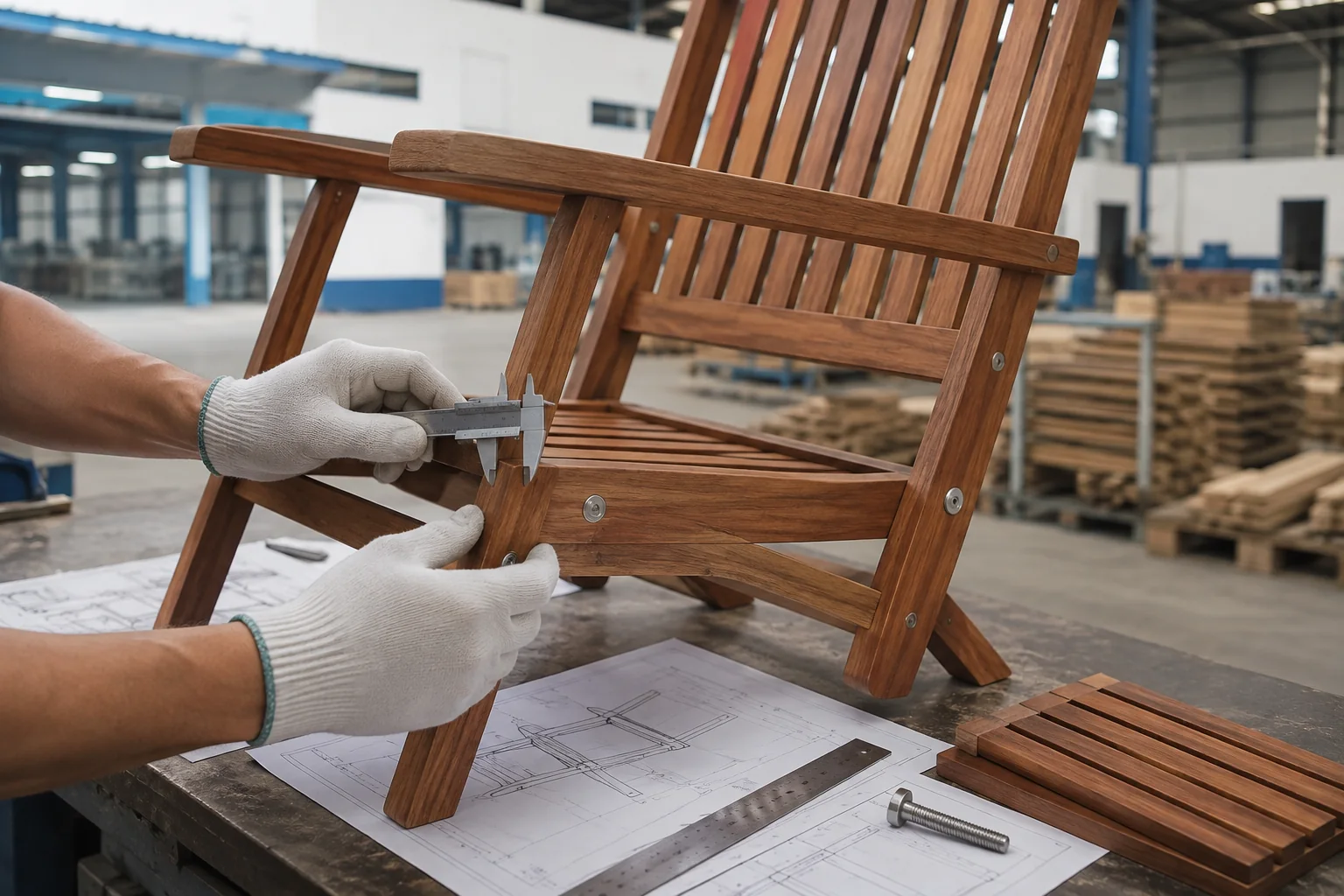
1. Confirm Product and Programme Fit
A supplier may produce outdoor furniture without being the right fit for every programme. Review the categories, materials and construction methods that form part of the factory’s regular work. Repeated experience with similar products generally matters more than a broad list of theoretical capabilities.
For example, a programme involving folding chairs requires attention to moving joints, hardware consistency and safe operation. A dining-set programme adds matching requirements across tables, chairs and benches. Decking tiles introduce another set of concerns, including dimensional consistency, drainage, connection systems and pack configuration.
Ask the supplier to show relevant examples and explain which operations are completed internally and which are coordinated with approved external partners. The objective is not to insist that every process happens under one roof. It is to understand ownership, control and accountability throughout the programme.
2. Turn Material Names into Working Specifications
Terms such as acacia, eucalyptus and teak are a starting point, not a complete material specification. Buyers should establish the timber grade, moisture expectations, visible-defect criteria, component dimensions and permitted construction methods. The specification should also address how components are matched and how repairs or fillers are handled.
Outdoor use adds environmental stress through moisture, temperature changes, sunlight and repeated wet-dry cycles. Performance therefore depends on the complete product system: timber preparation, joint design, adhesive, hardware, surface preparation, finish application and maintenance guidance.
When reviewing material options, ask the manufacturer to explain:
- Why the proposed species suits the product and target price position
- How timber moisture is checked and recorded
- Which joints and reinforcements are used in load-bearing areas
- How metal components are selected for the intended environment
- What finish system is proposed and how it should be maintained
A useful specification makes acceptance criteria visible to both parties. It reduces the risk of approving an attractive sample that cannot be reproduced consistently at production scale.
3. Review the OEM and ODM Development Process
For private-label furniture, the development process is often where commercial risk first appears. Confirm how the manufacturer handles drawings, samples, bills of materials, revisions and approvals. Every change should have an owner and a record.
An OEM programme normally begins with a buyer-controlled design or specification. An ODM programme may start with a supplier concept that is adapted to the buyer’s target market, dimensions, materials, finish and packaging. In both cases, the parties should agree which version is the production reference.
Before approving a sample, check dimensions, comfort, stability, movement, hardware, finish colour, assembly and packaging. Photograph critical details and record any approved deviations. If several SKUs share components, verify that common parts are genuinely interchangeable and identified consistently.
Good furniture sourcing guides should help buyers define decisions, not just collect product images. The development record becomes the foundation for inspection, corrective action and repeat orders.
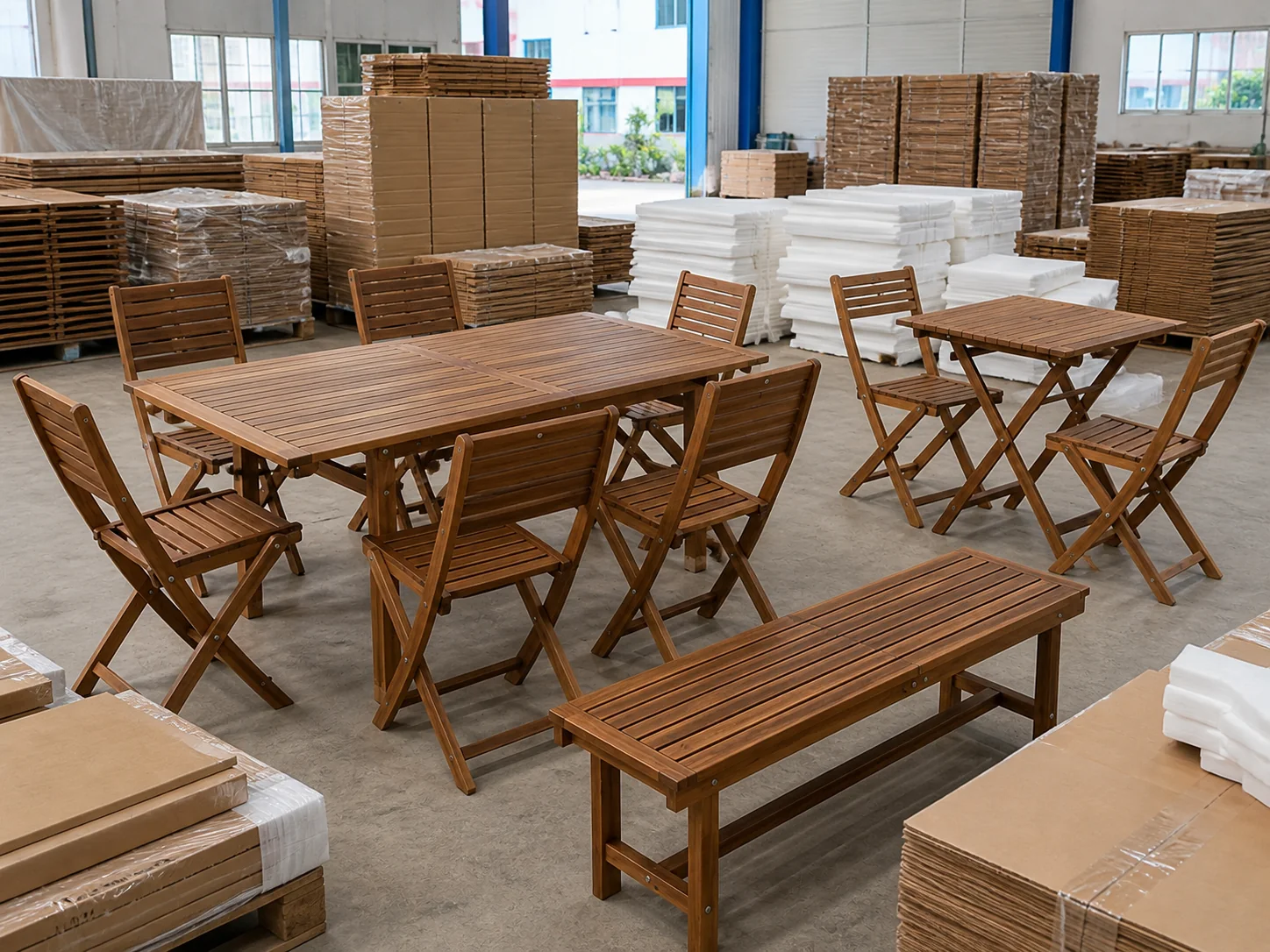
4. Define Quality Checkpoints Before Production
Quality control is most effective when expectations are agreed before materials are cut. Do not rely only on a final inspection. By that stage, a dimensional, structural or finish problem may affect an entire batch.
A practical control plan can include incoming checks, first-piece approval, in-process checks, assembly verification, finish approval, packaging review and final inspection. The exact sequence should reflect the product’s construction and risk profile.
Ask who records the checks, how non-conforming items are separated and how corrective actions are closed. For critical dimensions or performance requirements, define the method, sampling approach and acceptance threshold. If a buyer or destination market requires testing, confirm the applicable standard and obtain current evidence for the exact product or construction being discussed.
Certificates, audit results and test reports should never be treated as interchangeable. Buyers should verify the issuing organisation, scope, validity period, factory address and products covered. A logo on a presentation is not a substitute for current documentation.
5. Evaluate Packaging as Part of Product Engineering
Packaging affects product protection, container utilisation, assembly experience and return rates. It should be reviewed during development rather than added after the product has been approved.
Specify whether the programme is intended for store delivery, distribution-centre handling, parcel shipment or direct-to-consumer fulfilment. Each route creates different requirements for carton strength, internal protection, hardware control, labelling and assembly instructions.
Request a packaging proposal that shows the packed dimensions, gross and net weight, carton construction, protection points, hardware pack and instruction format. Where container efficiency is commercially important, review loading assumptions by SKU and confirm whether mixed-SKU planning is required.
A packaging test or trial shipment should use the agreed production pack. If any method or threshold is mandatory, record it in the programme specification instead of relying on general statements such as “export standard packaging.”
6. Make the Quotation Comparable
A low quotation may exclude development, testing, special packaging, tooling or other programme requirements. Ask every shortlisted supplier to quote against the same information and state what is included.
The quotation should identify the product reference, specification version, material, finish, packaging, order basis and commercial terms. Any assumption should be written down. Buyers should also ask which inputs could change the price, such as material selection, construction changes, pack configuration or order mix.
MOQ and lead time should be confirmed for the actual programme rather than taken from a generic marketing page. They can vary by product complexity, material availability, development status, finish system, order mix and season. Treat them as project-specific commercial fields that require written confirmation.
7. Check Communication and Change Control
Reliable production depends on reliable information. Identify the commercial and technical contacts, the expected response route and the documents used to control changes. This becomes especially important when the buyer, design team, inspection team and factory are in different time zones.
Use a simple approval register covering drawings, samples, finishes, labels, packaging and assembly instructions. When a change is requested, record its effect on cost, timing and existing materials before approving it. Avoid approving important changes only through unstructured chat messages.
During production, agree on a reporting rhythm that matches the programme’s risk. The purpose is not constant supervision. It is early visibility of issues that could affect specification, timing or shipment.
8. Verify Export and Destination-Market Readiness
A manufacturer’s export experience is relevant, but buyers still need programme-specific checks. Confirm the required product information, labels, packaging marks, shipping documents and origin records for the destination market.
Regulatory and customer requirements can differ between the United States, European markets and Japan. The importer remains responsible for understanding the obligations that apply to the product and sales channel. Ask the manufacturer what evidence it can provide and identify any missing work before production approval.
If responsible sourcing, social compliance, environmental management or product testing is required, request current documentation and review its scope. Do not infer that one factory, product or certificate covers another.
A Practical Pre-Quotation Checklist
Before selecting an outdoor furniture manufacturer Vietnam partner, confirm that your sourcing file answers these questions:
- Is the target product and sales channel clearly defined?
- Are drawings, dimensions, construction and material requirements documented?
- Has the factory demonstrated relevant product experience?
- Is there a controlled sample and approval process?
- Are quality checkpoints linked to written acceptance criteria?
- Does the packaging proposal match the distribution route?
- Are quotation assumptions, exclusions and commercial terms visible?
- Are required audits, certificates or tests current and in scope?
- Is there a documented process for revisions and corrective actions?
- Can both parties identify the information still required before production?
This approach turns furniture sourcing into a structured evaluation rather than a price-only comparison. It also creates a clearer brief for shortlisted factories and a stronger basis for repeat programmes.
Discuss an Outdoor Furniture Programme with Nghia Son
Nghia Son Furniture works with solid acacia, eucalyptus and teak across its outdoor furniture range. Buyers can begin with an existing collection or discuss a programme based on drawings, reference samples and target specifications.
To start an evaluation, prepare the product category, target market, material preference, estimated quantities and any available drawings or reference images. The export team can then review the request and identify the technical and commercial information needed for the next step.