
Nghia Son Furniture Amid Opportunities and Challenges as Vietnam’s Wood Industry Targets $18.5 Billion in Exports

Vietnam’s wood and furniture industry is approaching a major milestone as it targets an export turnover of USD 18.5 billion by 2026. However, to achieve this target, enterprises in the industry must overcome multiple challenges, including global economic volatility, rising logistics costs, and increasingly stringent product standards.
In this context, manufacturers and exporters such as Nghia Son Furniture are actively adapting to market trends by diversifying product portfolios, expanding distribution channels, and strengthening brand value in international markets.
Vietnam’s wood industry targets USD 18.5 billion in export value
According to data from the Ministry of Agriculture and Environment, Vietnam’s exports of wood and wood products reached USD 2.61 billion in the first two months of 2026 , up 5.8% year-on-year compared to 2025. ( Source: Vietnambiz)
The industry has set an ambitious goal of achieving USD 18.5 billion in export turnover by 2026 , representing an increase of approximately 7% compared to the previous year . (Source: Vietnambiz)
Industry leaders believe this target is challenging but achievable , thanks to Vietnam’s growing manufacturing capacity and stable demand from major global markets.
Currently, Vietnam is among the leading exporters of wooden furniture globally , with annual export turnover exceeding USD 17 billion , positioning the country as a key global supplier in the industry.

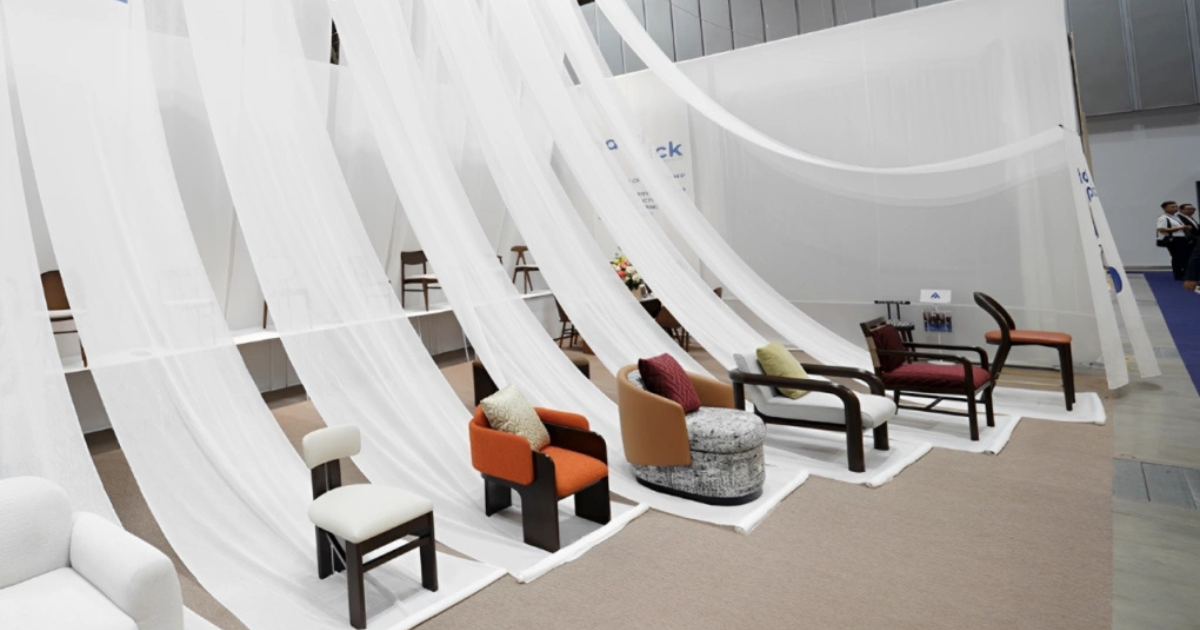
Booth of a domestic furniture company at HawaExpo 2026 (Photo: Hawa)
Market uncertainties impacting the furniture industry
Despite positive growth prospects, Vietnam’s wood industry is facing several uncertainties stemming from the global economic environment.
Experts highlight geopolitical risks, including conflicts in the Middle East , which may disrupt supply chains and increase transportation costs. (Source: Vietnambiz)
These impacts were also evident at HawaExpo 2026 , where some buyers from Europe and the Gulf region were unable to attend due to disrupted flight routes.
According to trade promotion experts, these factors may affect:
- international logistics costs
- production costs
- purchasing decisions of global importers
However, Vietnam’s wood industry continues to maintain its competitive edge thanks to strong manufacturing capabilities and business adaptability.
Vietnamese furniture companies need to enhance value
One of the key challenges facing Vietnam’s furniture industry is that many companies still operate under an OEM manufacturing model, producing goods for foreign brands.
To increase export value and competitiveness, experts recommend that Vietnamese enterprises focus on:
- developing original product designs
- building their own brands
- expanding direct-to-consumer sales channels
These changes will enable companies to generate higher added value rather than relying solely on production volume.
Additionally, major markets such as the European Union and the United States are introducing stricter regulations on timber traceability and anti-deforestation, requiring manufacturers to adopt more sustainable practices.
Industry authorities aim for 80% of exported wood products to meet green and sustainability standards, turning compliance into a competitive advantage.
Nghia Son Furniture in the industry transformation
Amid the transformation of Vietnam’s furniture industry, companies like Nghia Son Furniture are actively adapting to new market dynamics.
With years of experience in export-oriented furniture manufacturing, the company has participated in the global supply chain, serving major markets such as the United States, Europe, and Japan.
To align with emerging trends, Nghia Son Furniture focuses on key strategic priorities:
- product design innovation
- expanding international distribution channels
- participating in global trade fairs and exhibitions
- upgrading manufacturing standards to meet global requirements
These strategies help maintain stable orders while enhancing the global reputation of Vietnamese furniture.
Opportunities from global supply chain shifts
The restructuring of global supply chains is creating new opportunities for Vietnam’s furniture industry.
In recent years, international buyers increasingly recognize Vietnamese furniture for:
- improved design quality
- reliable manufacturing standards
- capacity for large-scale production
Experts note that Vietnamese furniture is increasingly accepted in higher price segments due to improvements in design and product quality compared to mass-produced alternatives. (Source: Vietnambiz)
This trend creates significant opportunities for Vietnamese companies to strengthen brand value and expand global market share.
Conclusion
The target of achieving USD 18.5 billion in wood and furniture exports by 2026 represents both a challenge and a strong growth driver for Vietnam’s wood industry.
To reach this goal, companies must continue innovating, increasing product value, and aligning with international standards.
In this process, manufacturers and exporters such as Nghia Son Furniture play a crucial role in:
- enhancing production capabilities
- developing higher-value furniture products
- expanding into global markets
This transformation not only contributes to industry growth but also strengthens the position of Vietnamese furniture on the global trade map.