
An export enterprise survival strategy now rests on one thing above all: not depending on a handful of markets. To access international markets, businesses must go step by step, taking advantage of e-commerce platforms like Alibaba and participating in international fairs as well as domestic ones.
Vietnam has a highly open economy and many bilateral and multilateral free trade agreements. According to Mr. Do Quoc Hung, Deputy Director of the Department of Foreign Market Development at the Ministry of Industry and Trade, Vietnam achieved a total import-export turnover of more than 786 billion USD in 2024, of which export turnover reached more than 400 billion USD.
However, 70% of total export turnover is still concentrated in key markets such as the United States, EU, Japan, Korea, China and ASEAN. This poses an urgent problem: if those markets adjust policy on tariffs or environment, or if recession reduces consumer demand, Vietnam’s exports in general and individual businesses in particular will be seriously affected. Market diversification therefore becomes a vital strategy, and for many exporters it is the whole of their export enterprise survival strategy rather than one part of it.
Market Diversification as an Export Enterprise Survival Strategy
The sustainable Nordic market
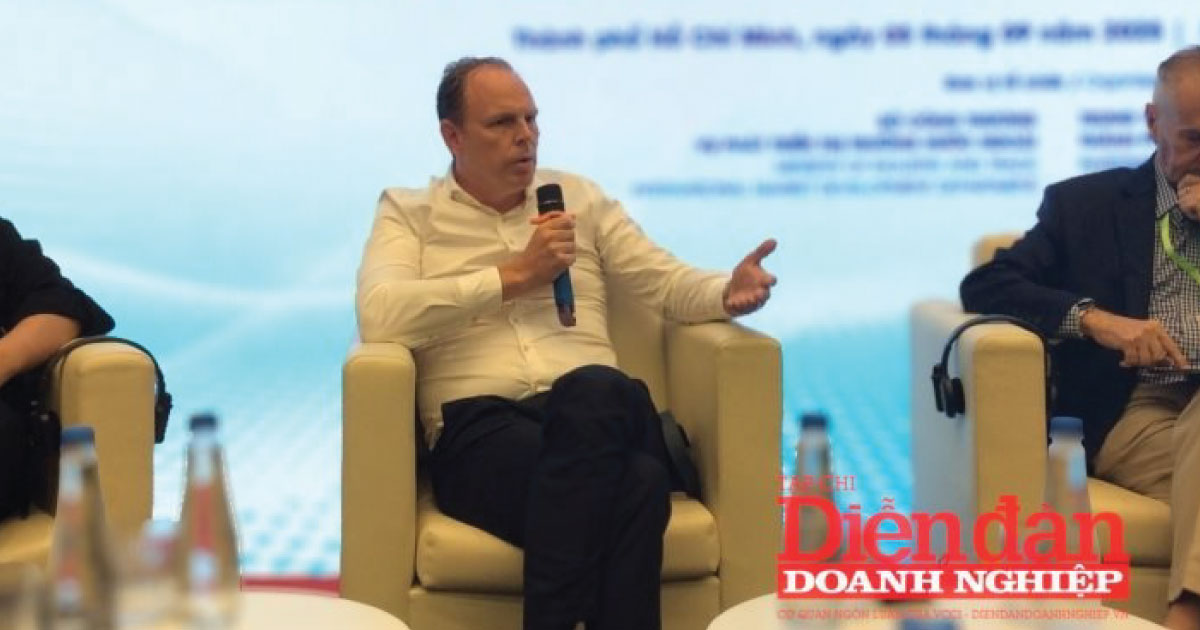
Mr. Per Ljungblad – Natural Fiber Product Development Manager Southeast Asia, IKEA Group.
Sweden, Denmark, Finland, Norway and Iceland are not only strong economies but also have very high demands on product quality and prioritise social and environmental values. Consumption trends in the region are changing rapidly, focusing on sustainability, environmental protection and responsible production.
Per Ljungblad, IKEA’s Natural Fibres Business Development Manager for Southeast Asia, said that in the current volatile market environment it is necessary to diversify supply sources, and Vietnam plays an important role in building a more sustainable supply chain. European customers expect IKEA to offer more sustainable options, such as recycled plastics and fast-growing materials with low CO2 emissions. Materials such as bamboo and water hyacinth, abundant in Vietnam, have been used by IKEA for more than 30 years and are considered sustainable by European customers.
To reduce dependence on certain countries and widen sourcing options, IKEA sees Vietnam as a solution, but it is important that raw materials are sourced locally.
Mr. Huynh Le Dai Thang, Member of the Executive Committee of the Handicraft and Wood Processing Association of Ho Chi Minh City (HAWA) and Director of Nghia Son Furniture Company, also described the major challenges facing the Vietnamese wood industry. From 31 December this year, all wood products exported to Europe must comply with EUDR standards, meaning the origin of the wood must be traced to its place of origin. If this is not done, customs can destroy the goods, which is a very strict regulation.
Latin America: affordable and quality
Latin America, with a population of more than 650 million, mostly young, and a rapidly growing middle class, creates great consumer demand for beverages, food, textiles, footwear and electronics. Although Vietnam’s trade turnover with the region is still modest, Vietnam and several Latin American countries have joined trade agreements such as the CPTPP, including Mexico and Chile, creating a significant advantage for exports.
Ms. Veronica Alcaraz Silva, Chief Representative of Coppel Vietnam, shared that 70% of the Mexican population has very low income and is looking for good quality products at affordable prices. This is the main reason Coppel came to Vietnam. She also emphasised the importance of the Certificate of Origin in taking advantage of CPTPP, because Vietnamese suppliers sometimes buy raw materials from China, which affects compliance.
On transport, goods can be sent from Vietnam to Mexico via Lazaro Cardenas and Manzanillo in four to six weeks. On standards, the Mexican market does not require many certificates, only compliance with NOM, the Mexican national standards, which is relatively simple.
Related reading
- Exporting Through E-Commerce: A New Opportunity for Vietnamese Businesses to Eliminate Middlemen and Expand Globally
- Boosting Exports To Global Distribution Chains
- Nghia Son Aligns Strategy at Kick-off Business Plan 2026
- Wood industry seeks solutions to maintain US market
- EUDR challenges at the threshold of the EU market for the wood industry
- Water hyacinth and reed grass bring in billions
Middle East: opportunities with CEPA and Halal products
The Middle East, comprising 16 countries with more than 400 million people, is a potential export market thanks to its high standard of living, high incomes and strategic location. Demand for Halal products is growing strongly.
Mr. Mirash Basheer, Director of Garment Exports Vietnam at Lulu Group, a leading supermarket and hypermarket chain with more than 280 stores in six Middle Eastern countries, said Vietnam is considered one of Lulu’s key strategic sourcing partners. Vietnam can compete with neighbouring countries such as China on price, and on quality it can compete with all other Asian countries Lulu sources from. Vietnam is also the first country to sign the CEPA agreement with the UAE, which brings 90% of products into the Middle Eastern market at zero or very low tariffs.
Lulu is sourcing more than 300 different products from Vietnam for the Middle East and India markets. While sourcing Halal products from Vietnam was difficult in the past, there has been significant growth thanks to new developments and the establishment of new Halal agencies in Vietnam.
Canada: wide open potential with CPTPP
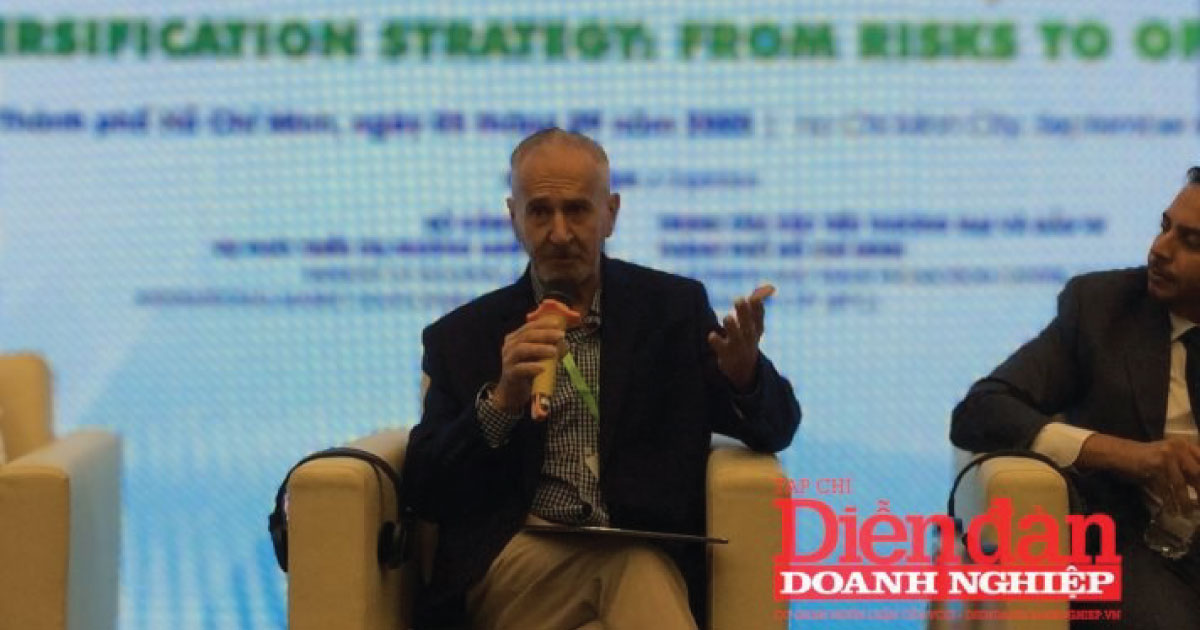
Mr. Michel Verdy – President of the Quebec – Vietnam Association.
Canada, a key member of the CPTPP, is considered a growing market with high requirements for quality, sustainability and transparency in the supply chain. Vietnam’s exports to Canada have grown rapidly, by about 20%, reaching nearly 5 billion USD, but remain modest compared with the potential.
Mr. Michel Verdy, President of the Quebec-Vietnam Association, emphasised that the CPTPP, signed in 2018, provides preferential access and a framework for services, investment, and social and environmental standards between Canada and Vietnam without time limits. The greatest potential lies in high technology, including artificial intelligence, aerospace and video games, where Vietnam’s young, technologically skilled workforce fits Canadian industry.
Clean technology and green energy also offer opportunities as both regions commit to climate action. Mr. Verdy also noted potential in digital transformation and e-commerce, agricultural and seafood products, textiles, apparel and footwear, furniture and decoration, along with tourism, education and cultural exchange.
Why Scale Decides Which Export Enterprise Survival Strategy Fits

Mr. Huynh Le Dai Thang – Member of the Executive Committee of the Handicraft Association.
Mr. Huynh Le Dai Thang frankly admitted that small businesses, even very small ones, find it genuinely difficult to access international markets because of the demands multinational corporations place on suppliers. Small scale makes it hard to meet strict requirements on price, quality, and especially sustainability issues such as controlling emissions, waste, chemicals and environmental impact that large corporations like IKEA require. He advised that small businesses can become sub-suppliers to larger ones, but must still meet the same standards.
To access international markets, Mr. Thang suggested going step by step, taking advantage of e-commerce platforms such as Alibaba and participating in international and domestic fairs. Businesses must measure their own strength and should not be ambitious about joining multinational corporations if their scale is too small; they should look for smaller partners instead. Most importantly, before entering any market, a business must thoroughly understand its tastes, product designs, standards and regulations, and must invest methodically.
Read across the four markets above, the pattern is consistent. Each destination asks for a different entry cost: the Nordics ask for sustainability credentials, Mexico asks for a clean Certificate of Origin, the Middle East asks for Halal certification, Canada asks for supply chain transparency. Diversification is therefore not one decision but four separate qualification projects, which is exactly why it defeats businesses that attempt all of them at once.
Frequently Asked Questions
Because 70% of Vietnam’s export turnover goes to a handful of markets: the US, EU, Japan, Korea, China and ASEAN. A tariff change, environmental regulation or recession in any of them transmits directly into export revenue with no buffer.
From 31 December, all wood products exported to Europe must have their timber origin traced back to the place of origin. Goods that cannot demonstrate this can be destroyed by customs.
The Nordics, where sustainability credentials decide access; Latin America, especially Mexico under CPTPP, where affordable quality and a clean Certificate of Origin matter; the Middle East, where the Vietnam-UAE CEPA gives 90% of products zero or very low tariffs and Halal certification is growing; and Canada, where CPTPP offers preferential access across technology, green energy, furniture and consumer goods.
Work step by step rather than pursuing multinational accounts directly. Use B2B platforms such as Alibaba, attend domestic and international fairs, consider becoming a sub-supplier to a larger exporter, and study one target market’s tastes, designs, standards and regulations thoroughly before committing.
Source: diendandoanhnghiep.vn