
Global distribution chains have become the route Vietnamese manufacturers use to reduce their dependence on a handful of traditional buyers. Mr. Huynh Le Dai Thang, Director of Nghia Son Furniture Company Limited (Dong Nai), said that the company produces indoor and outdoor furniture from cajuput and eucalyptus wood combined with aluminium, iron, rattan and other materials, exporting 60 containers per month to its main markets in the United States, Europe and Japan.
The reason for this success, in a context where the export market faces many difficulties, is that the company implemented a market diversification strategy early: penetrating global distribution chains and approaching foreign customers through international e-commerce sites and platforms.
Why Global Distribution Chains Replaced the Few-Buyer Model
According to the Ministry of Industry and Trade, in the past businesses only needed to export to a few markets to be assured of output for their goods, and were less concerned about promotion and finding more customers. However, when trade flows fluctuate constantly, traditional markets are no longer stable and can even pose risks. Diversifying export markets has become a vital requirement for Vietnamese businesses.
As of August 2025, Vietnam’s total import-export turnover reached nearly 597.93 billion USD, up 16.3% over the same period last year. Notably, exports to markets with Free Trade Agreements have all recovered positively. New generation FTAs such as CPTPP, EVFTA and UKVFTA, along with a series of bilateral and multilateral FTAs that Vietnam has signed and implemented, have created a large market network and become a driving force for Vietnamese businesses to step out into the world.
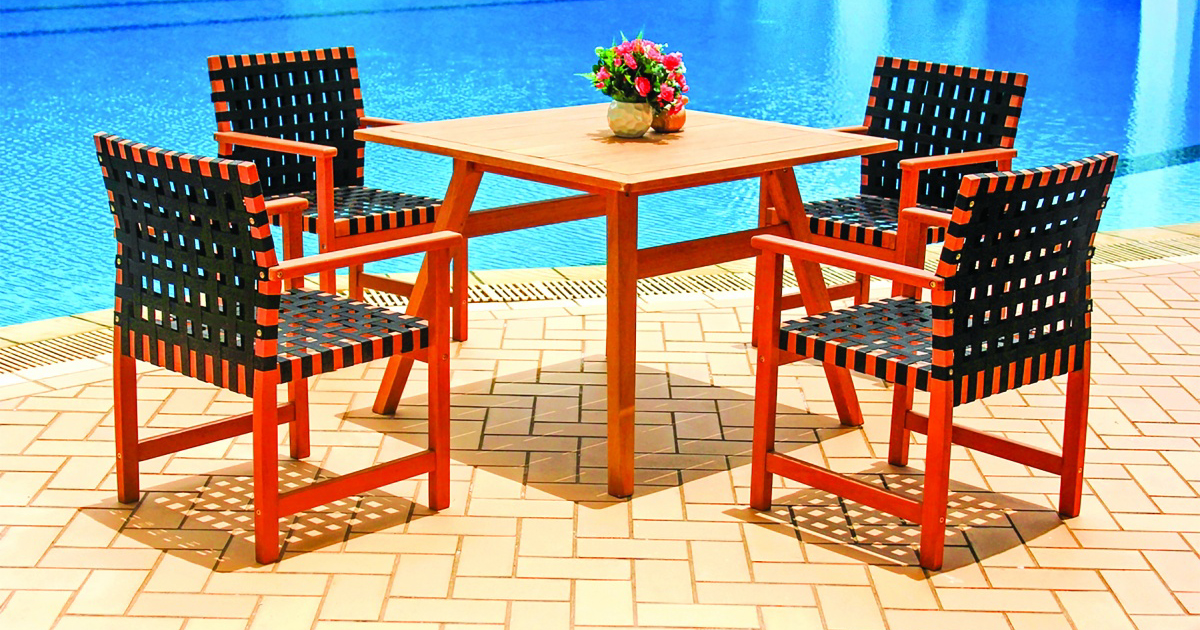
An export product of Nghia Son Wooden Furniture Company Limited
What International Buyers Are Looking For
According to Ms. Veronica Alcaraz Silva, Chief Representative of Coppel Vietnam, bringing Vietnamese goods abroad through direct connection between large global retailers and domestic production units has recorded a great level of interest, with more than 450 distribution channels and reputable importers from more than 60 countries and territories, alongside the participation of hundreds of Vietnamese enterprises.
In addition to traditional markets such as the United States, EU, Japan and Korea, Vietnam also attracts many importers from the Middle East, Latin America and Eastern Europe, which are emerging potential regions. However, for Vietnamese goods to be widely present, enterprises must constantly update new standards and consumer tastes, invest in improving quality, apply science and technology to trace origins, and hold a green and sustainable development strategy.
A representative of Walmart Group said that Walmart’s global supply chain purchases and distributes more than 100 billion products each year. From that experience, Walmart believes customers in all regions tend to prioritise good quality products and choose to shop at distribution channels with a variety of goods, quality services and convenient shopping experiences. Walmart is therefore constantly expanding its supplier network, from agricultural products and food to textiles and household goods, with specific requirements on quality commitment and clear traceability.
As one of many international buyers coming to Vietnam to look for suppliers, Mr. Per Ljungblad, Natural Fiber Development Manager for Southeast Asia at IKEA Group, said he is looking for innovative, environmentally friendly consumer products.
“Through direct discussions, we have found that Vietnamese enterprises have very diverse production capacity and are grasping global consumption trends quite well. Many enterprises have special creativity to help increase product value and customer experience. After learning, we plan to visit manufacturing plants directly to promote purchasing cooperation activities in the near future,” he shared.
Related reading
- Nghia Son Aligns Strategy at Kick-off Business Plan 2026
- Water hyacinth and reed grass bring in billions
- Nghia Son Furniture and a Value-Driven Strategy Beyond Low-Cost Competition in Vietnam’s Wood Furniture Industry
- Survival strategy of export enterprises
- Wood industry seeks solutions to maintain US market
- Exporting Through E-Commerce: A New Opportunity for Vietnamese Businesses to Eliminate Middlemen and Expand Globally
From Processing to Product Development Partner
Commenting on the current situation, Ms. Nguyen Thao Hien, Deputy Director of the Department of Foreign Market Development at the Ministry of Industry and Trade, said the import-export turnover figures reflect an important transformation in the business model of Vietnamese enterprises: from pure processing to becoming a product development partner, co-creating with global brands.
“The international business community sees Vietnam as a leading manufacturing hub in the region with the ability to supply a wide range of products at competitive prices and with constantly improving quality. At the same time, after the Covid-19 pandemic and recent geopolitical and economic instability, many corporations, retail and wholesale distribution channels, and e-commerce platforms are promoting diversification strategies, ensuring sustainable supply sources and have chosen Vietnam as a strategic location in their global supply chains,” said Ms. Hien.
How Suppliers Qualify for Global Distribution Chains
The requirements named by the buyers quoted above converge on four things, and they are the same four whether the counterparty is Walmart, IKEA or Coppel. Traceability comes first: a documented origin for every material, verifiable on request rather than asserted. Consistent quality comes second, meaning defect rates that hold across repeat orders rather than across a single sample. Capacity to scale comes third, since a distribution chain buys in volumes that a workshop cannot absorb. Environmental credentials come fourth, and they are now a filter rather than a differentiator.
What has changed is the sequence. A manufacturer used to win the order and then build the compliance file. In global distribution chains the file is what gets the meeting, and factory visits like the one IKEA describes above come after the paperwork has already been reviewed, not before.
Frequently Asked Questions
The purchasing and distribution networks of large international retailers and wholesalers, such as Walmart, IKEA and Coppel, which source directly from manufacturers rather than through trading intermediaries. More than 450 such channels and importers from over 60 countries are currently engaging with Vietnamese suppliers.
Because trade flows fluctuate and traditional markets have stopped being reliable. The Ministry of Industry and Trade describes concentration on a few buyers as a risk rather than a convenience, which is why diversification is treated as a vital requirement rather than an option.
Total import-export turnover reached nearly 597.93 billion USD as of August 2025, up 16.3% year on year, with exports into FTA markets such as CPTPP, EVFTA and UKVFTA all recovering positively.
Indoor and outdoor furniture from cajuput and eucalyptus wood, combined with aluminium, iron, rattan and other materials, at 60 containers per month to the United States, Europe and Japan.
Source: thoibaonganhang.vn