
The wood industry US market position is under pressure from reciprocal taxes, which will cause great difficulties for Vietnamese wood exports to the United States. However, wood industry enterprises are still making efforts to maintain this market.
Despite concerns about reciprocal taxes, Vietnam’s exports of wood and wood products to the United States are still growing. In April, wood and wood product exports to this market reached 799 million USD, up 4.1% over the same period in 2024. In the first four months of the year, they reached 2.9 billion USD, up 10.3% year-on-year.
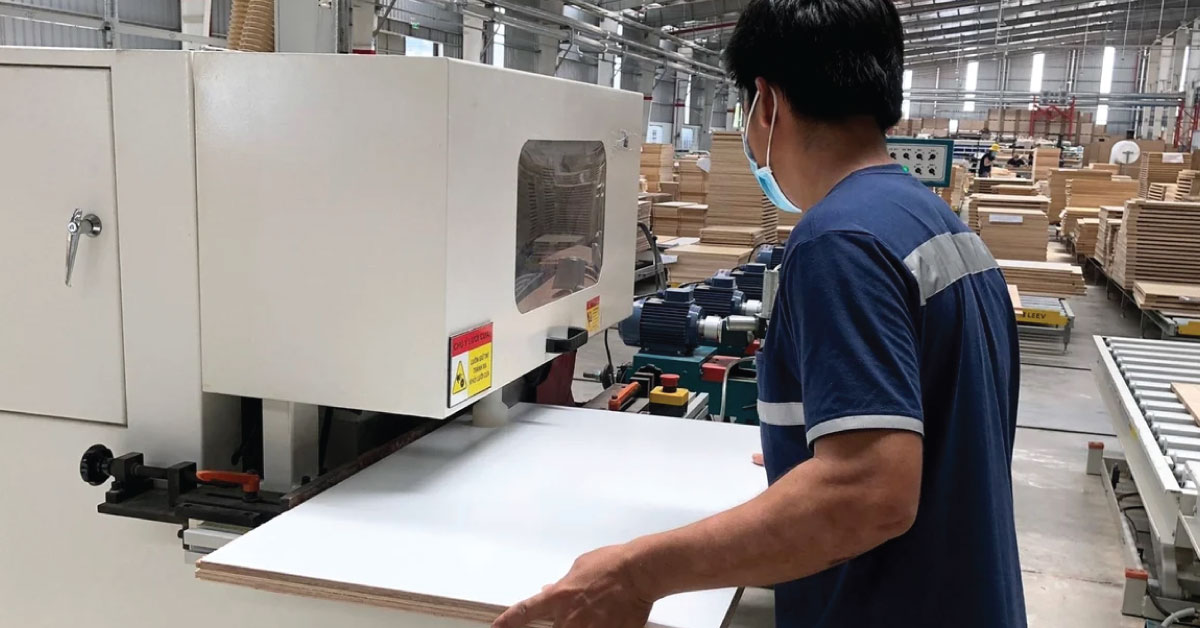
Producing wooden products for export at a factory in Binh Duong. Photo: Son Trang.
Wood Industry US Market Dependence in Numbers
The US market still accounts for more than half of the export turnover of wood and wood products, and the proportion is even slightly higher than the same period last year, at 54.4% compared with 54.1%. This shows that wood industry enterprises are focusing on delivering goods to the United States while that government has temporarily suspended the imposition of reciprocal taxes. It also shows how heavily Vietnam’s wood exports depend on this single destination.
Since the United States accounts for more than half of exports, shifting to other markets after reciprocal tariffs take effect is not easy. Each market has its own tastes and needs for wooden furniture, so furniture produced for the United States may not sell elsewhere. The capacity of the US market is too large for other markets to compensate, which is why wood industry US market exposure cannot be unwound quickly even when the tariff risk is known in advance.
Enterprises are therefore taking the opportunity to deliver goods now, while hoping the official reciprocal tariffs land at an acceptable level. Vietnamese wood and wood products account for nearly half of US wood and wood product imports, so it is not easy for US importers to find alternative sources of supply, especially when China, the second largest source, is also subject to very high tariffs.
Importing US Raw Wood to Reduce Tariff Exposure
The Vietnamese wood industry is also prioritising the import of raw wood from the United States. Mr. Ngo Sy Hoai, Vice President of the Vietnam Timber and Forest Products Association, said that because of tariff retaliation between China and the United States, it is currently very difficult to export raw wood from the United States to China. If Vietnam increases imports of round wood and sawn wood from the United States, it both demonstrates goodwill and reduces the disparity in wood trade between the two countries.
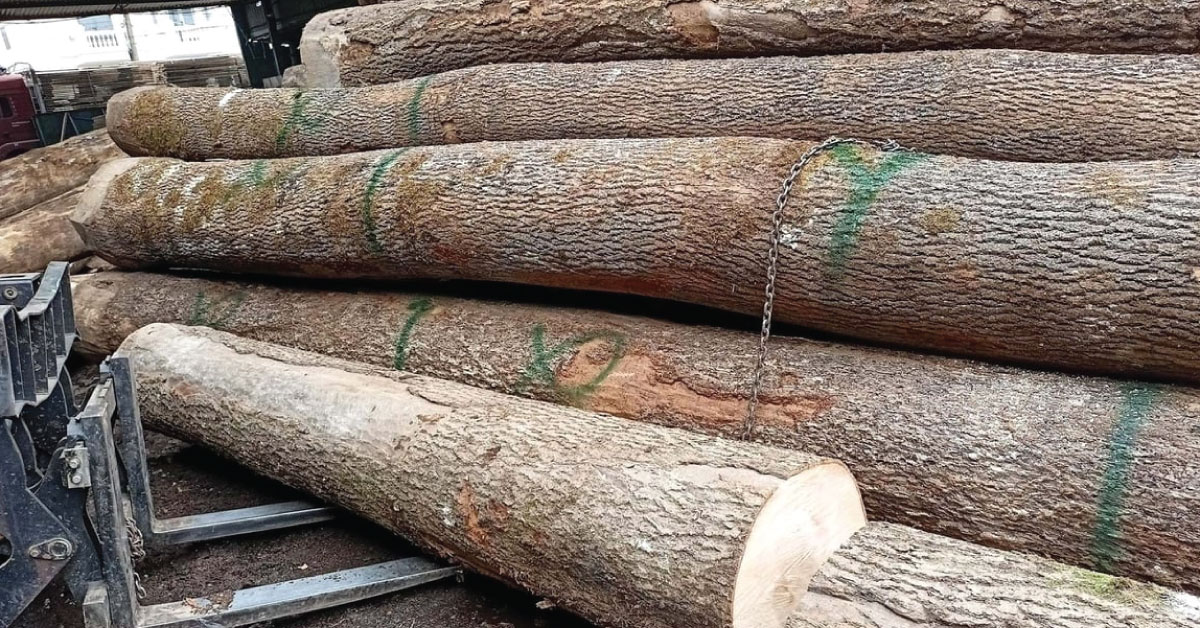
Vietnam’s wood industry is prioritizing the import of raw wood from the United States. Photo: Son Trang.
Using raw wood imported from the United States to produce furniture for export back to the United States also reduces tariff pressure. According to Mr. Do Ngoc Hung, Vietnam Trade Counselor in the United States, Vietnamese goods exported to the United States that can prove 20% or more of their raw material origin or other factors come from the United States will only be subject to reciprocal taxes on the value not originating from the United States.
Import data confirms the priority. According to the Customs Department, in the first three months of 2025, raw wood imports from the United States reached 191 thousand cubic metres, worth nearly 79 million USD, up 34.1% in volume and 28.1% in value compared with the same period in 2024.
Related reading
- Dong Nai Branch – Nghia Son Wooden Furniture Co., Ltd
- Boosting Exports To Global Distribution Chains
- Exports to the US are optimistic but the risk of being imposed with penalties is also higher
- HAWA Representative: It is possible that wood products have not been subject to Trump’s reciprocal tariffs
- Water hyacinth and reed grass bring in billions
- Nghia Son Furniture and Its Direct-to-Consumer Strategy for Exporting Wooden Furniture to the U.S. Market
B2C Selling as a Way to Hold the Wood Industry US Market Share
Identifying the United States as the leading important market, many enterprises are determined to maintain their presence there even after reciprocal taxes apply. One solution many are aiming for is developing B2C sales, retailing directly to consumers through e-commerce platforms such as Amazon and Wayfair.
Mr. Huynh Le Dai Thang, Director of Nghia Son Wood Production and Trading Company Limited, said the company has been selling B2C for more than three years. Nghia Son has achieved initial results, with B2C sales accounting for about 10% of total export sales.
Ms. Luu Thi Hue, Senior Account Manager of Amazon Global Selling Vietnam, shared that furniture sales on Amazon are very large. In the whole of 2024 the Vietnamese wood industry exported more than 16.2 billion USD, while in just two days of Prime Day 2024 the total sales value of wooden products on Amazon reached about 14.2 billion USD.
However, Ms. Hue noted that to sell B2C on Amazon, wood industry businesses must be carefully prepared in terms of financial capacity, competitiveness and human resources, and must have a long-term vision for a retail strategy aimed at consumers abroad.
Reading the Two Strategies Together
The raw-material route and the B2C route address different halves of the same problem, and neither replaces the other. Importing American timber lowers the taxable value of each container, which protects existing OEM business without changing who the customer is. Selling B2C changes who the customer is, which lifts the margin on each unit but does nothing about the tariff on the goods crossing the border.
Run together they compound: a container built from US timber and sold direct to a US consumer carries both a smaller dutiable base and the retail margin that would otherwise have gone to an importer. That combination is why several exporters are pursuing both at once rather than choosing between them, even though B2C still represents a small share of turnover, around 10% in Nghia Son’s case after three years.
Frequently Asked Questions
More than half. The US share was 54.4% in the period reported, slightly up from 54.1% a year earlier. Vietnamese products in turn account for nearly half of all US wood and wood product imports.
Because furniture designed for American tastes often does not sell elsewhere, and no other market has the capacity to absorb the volume the US takes. Redirecting means redesigning the product range, not just redirecting containers.
Goods that can prove 20% or more US-originating content are only charged reciprocal tax on the portion that is not US-originating. Raw wood imports from the US rose 34.1% by volume in the first quarter of 2025 as a result.
It is a supplement rather than a substitute at present. Nghia Son reached about 10% of export sales through B2C after more than three years, and Amazon Global Selling cautions that success requires financial capacity, competitive product, staffing and a long-term retail strategy.
Source: nongnghiepmoitruong.vn