
Origin of goods has become the decisive compliance question for Vietnamese wood exporters. With Mr. Trump elected, the industry may continue to face protectionist measures and higher anti-dumping tariffs in the US, and the paperwork proving where timber actually came from is where most of that risk now sits.
In the first 10 months of 2024, the wood industry’s export turnover achieved impressive growth, with October alone estimated at 1.5 billion USD, up 20% compared to September and up 16.6% over the same period last year.
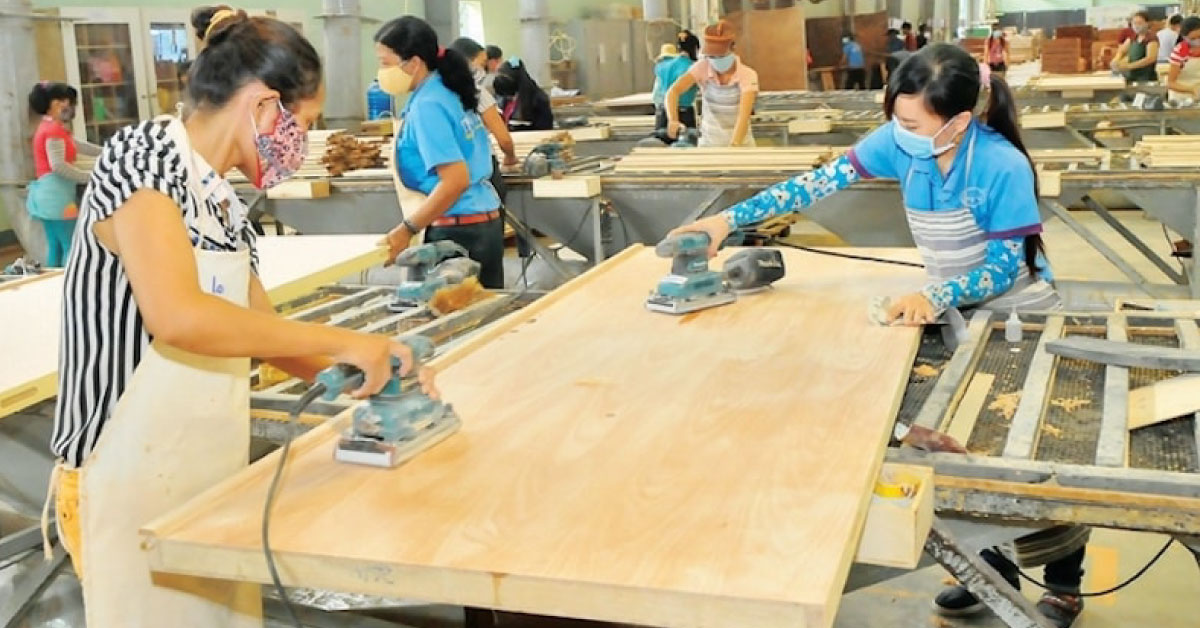
The US market accounts for about 50-55% of Vietnam’s wood export turnover.
Origin of Goods Scrutiny Arrives Alongside Record Growth
In the first 10 months of 2024, the wood industry’s export turnover reached 13.2 billion USD, an increase of nearly 21% compared to 2023, approaching the target of 14.2 billion USD for the whole year of 2024.
Vietnam’s wood products have reached 170 markets worldwide, of which the five major markets are the United States, Japan, China, South Korea and the EU, accounting for more than 90% of total wood export turnover. Notably, the US market is a very important market, accounting for more than 50% of Vietnam’s total wood export turnover.
Mr. Huynh Le Dai Thang, representative of Nghia Son Furniture Company, said that Mr. Trump’s determination to impose import taxes, especially the 60% tax on goods from China, will force American importers to find more competitive sources of supply in terms of price.
Therefore, Mr. Thang believes that with the current advantages of Vietnam’s wood furniture manufacturing industry, many US importers will continue to come to find sources of goods. The company’s export rate to the US in the near future may increase from the current 50% to 70%, making up for the EU market, which is increasingly demanding in terms of production standards and greening.
Sharing the same view, Mr. Nguyen Chanh Phuong, Vice President of the Handicraft and Wood Processing Association of Ho Chi Minh City (HAWA), said that export orders of enterprises are favorable. In particular, many companies have orders for production until mid-2025. Notably, the US market, which contributes more than 55% of the total turnover of the industry, is clearly recovering.
“With the new President’s policy of imposing high taxes on goods from China, it is likely that Vietnamese wooden furniture exports to this market will increase in the near future,” said Mr. Phuong.
Risk of High Penalty Tax
However, comments also noted the pressure on wood origin and sustainable production when the Trump administration scrutinizes the origin of goods very strictly. This forces exporters to prove the origin of wood, making it difficult for Vietnamese businesses to meet strict standards on origin and environmental protection.
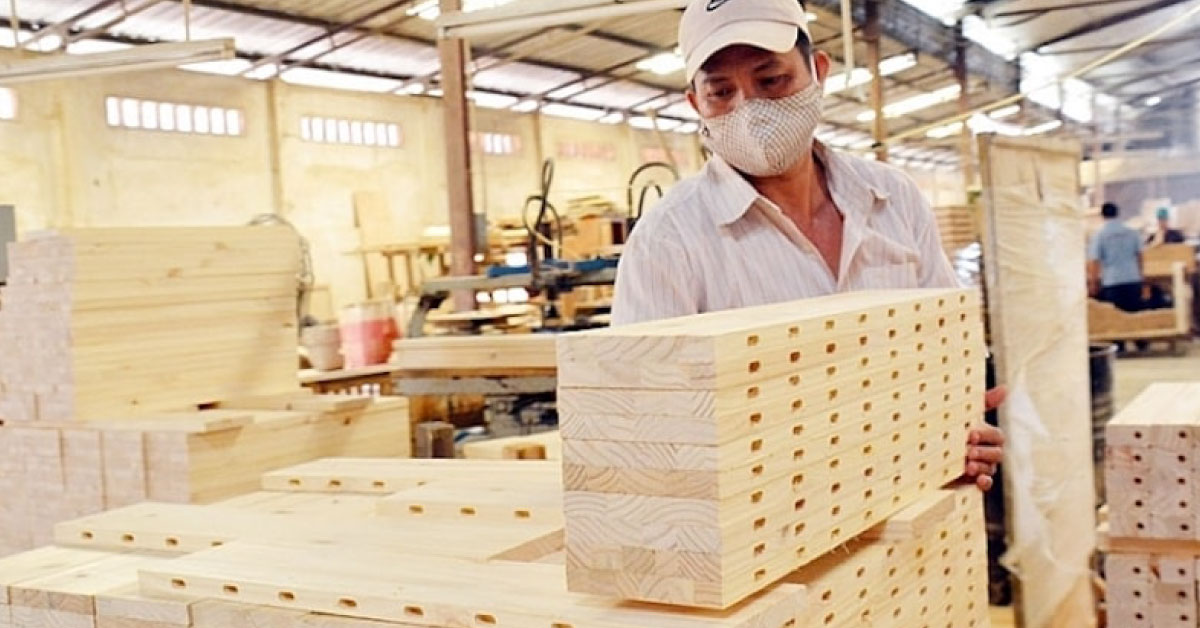
The Trump administration is very strict about the origin of goods. This forces exporters to prove the origin of wood.
Along with that, Mr. Nguyen Chanh Phuong said that it is necessary to strictly control the flow of investment, especially foreign wood enterprises moving to Vietnam to produce for export to the US. When imports from Vietnam increase sharply, the US will apply defense measures against Vietnamese wooden products, leading to difficulties for domestic enterprises.
“The pressure of reduced orders, high logistics costs, and the need to check the origin of wood will make it more difficult for wood industry businesses. In fact, during President Trump’s term, the US conducted many anti-dumping lawsuits against wood products from Vietnam, especially wooden furniture exported from Vietnam that were said to be disguised and originated from other countries such as China, then exported to the US. This causes wood businesses to face high tax penalties if they are found to have violated the law,” an expert shared.
Related reading
- HAWA Representative: It is possible that wood products have not been subject to Trump’s reciprocal tariffs
- Exports to the US are optimistic but the risk of being imposed with penalties is also higher
- Nghia Son Furniture Amid Opportunities and Challenges as Vietnam’s Wood Industry Targets $18.5 Billion in Exports
- Nghia Son Furniture and Its Direct-to-Consumer Strategy for Exporting Wooden Furniture to the U.S. Market
- Wood industry seeks solutions to maintain US market
As Mr. Nguyen Truong Thi, Deputy Director of the Department of Industry and Trade of Binh Duong province said: “Since the previous term, Mr. Donald Trump has applied many measures to protect goods when Vietnam has a large trade surplus with the US, including requiring Vietnam to increase imports from the US to reduce the trade surplus and adjust the exchange rate policy. Therefore, with Mr. Trump’s election as president this time, the Vietnamese wood industry may continue to face similar challenges but at the same time can also take advantage of new investment and development opportunities.”
Mr. Frederic Neumann, Chief Economist of Asia-Pacific Economic Research at HSBC Bank, commented that if Vietnam is considered a gateway for Chinese goods to enter the US, the US government may try to block this loophole and impose tariffs on goods from Vietnam. Therefore, Vietnamese businesses need to pay attention to pricing policies to avoid violating US anti-dumping rules and avoid trading in products subject to sanctions.
Besides, promoting trade exchange activities, increasing interaction and tightening trade relations so that the two sides can understand each other better is a measure to reduce risks for Vietnam before the new government.
What Exporters Are Asked to Prove on Origin of Goods
The practical burden falls on documentation. An origin of goods file that satisfies a US customs review has to trace timber back through every step that added value to it, not merely show where the finished furniture was assembled. That means species and harvest location for the raw timber, the chain of purchase records from forest or plantation to sawmill, the processing records at each facility, and evidence that no substituted material entered the flow along the way.
Two failure patterns draw the most scrutiny. The first is transshipment, where goods largely made elsewhere are finished in Vietnam and declared Vietnamese. The second is incomplete record-keeping: the manufacturing may genuinely take place in Vietnam, but the supplier cannot demonstrate it clearly during a review. Consistent material and transaction records help address this risk before an investigation begins, rather than forcing the business to reconstruct the evidence afterward.
Frequently Asked Questions
Because the stated policy targets Chinese goods with tariffs as high as 60%, any route that lets those goods enter the US through a third country becomes a target. Vietnam’s large trade surplus with the US makes it a natural place for that check to land, so exporters are asked to prove where their timber came from.
The US accounts for more than 50% of total wood export turnover, and by some measures more than 55%. Nghia Son Furniture expects its own share to the US could rise from around 50% to 70%.
Transshipment is finishing goods that were largely produced elsewhere and declaring them as originating in the finishing country. During President Trump’s previous term the US brought several anti-dumping cases over Vietnamese wooden furniture alleged to have originated in China, and businesses found in violation face high tax penalties.
Keep a complete chain of records from timber purchase through each processing step, use certification schemes that enforce chain of custody, watch pricing so it does not breach US anti-dumping rules, and avoid products subject to sanctions. Expanding trade contact between the two sides also lowers overall risk, according to the commentary above.
Source: diendandoanhnghiep.vn