
Wood exports to the US look set to grow under the new administration, but the penalty risk attached to them is rising just as fast. President Donald Trump has made reducing the trade deficit a top priority, so he will closely examine the origin of goods. Vietnam needs to avoid being seen as a gateway for Chinese goods to enter the US, which would invite high tariffs.
With the proposal to impose a 10-20% tax on imported goods from other countries, including 60% on China, the election of Donald Trump is considered an opportunity for Vietnamese goods to increase their entry into this market. However, experts and businesses predict that under the Trump administration, Vietnam may also face challenges from foreign investment in the wood and textile sectors entering Vietnam to circumvent rules on the origin of goods.
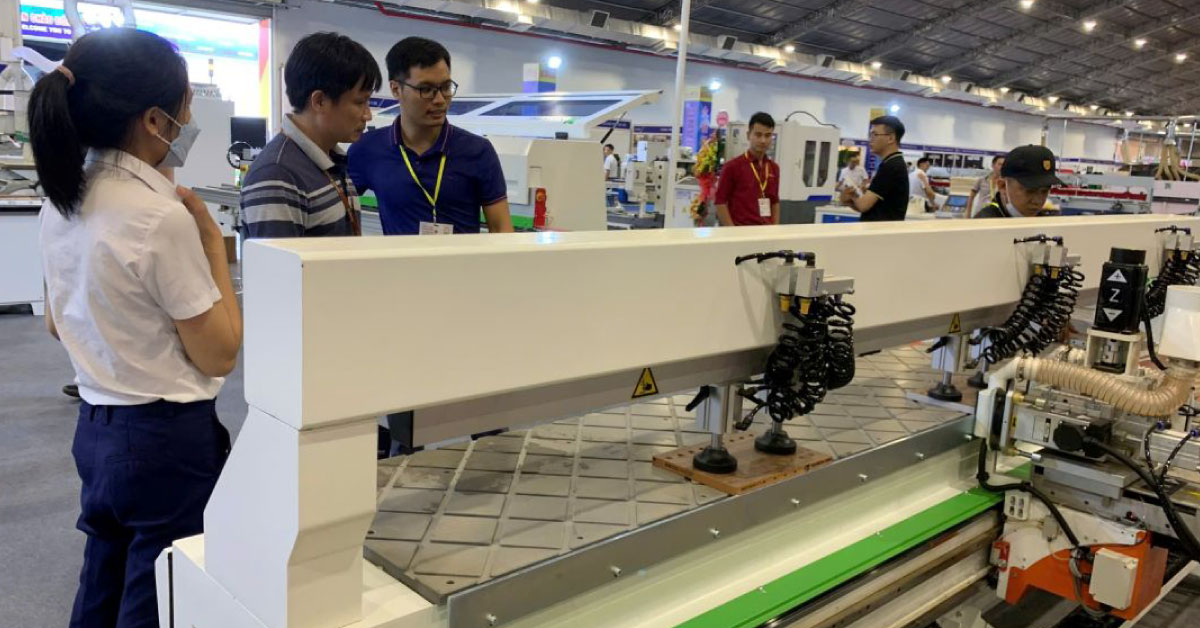
The wood furniture industry is expected to continue to increase exports to the US. Photo: L.H
Wood Exports to the US: Where the Benefit Is Expected
At Nghia Son Furniture Company, products exported to the US market account for 50% of total exports. The company director, Mr. Huynh Le Dai Thang, is therefore closely following developments in the presidential election.
Observing the economic and international trade solutions of the two candidates, Mr. Thang said that Mr. Trump’s determination in imposing import taxes, especially the 60% tax on goods from China, will make American importers look for more competitive sources of supply in terms of price.
He believes that with the current advantages of Vietnam’s wood furniture industry, many US importers will continue to come to find sources of goods. The company’s export rate to the US in the near future may increase to 70%, making up for the EU market, which is increasingly demanding in terms of production standards and greening.
A representative of the wood industry, Mr. Nguyen Chanh Phuong, Vice President of the Handicraft and Wood Processing Association of Ho Chi Minh City (HAWA), said that export orders from businesses are favorable. Many companies have orders for production until mid-2025. Notably, the US market, which contributes more than 55% of the industry’s total turnover, is clearly recovering.
“With the new President’s policy of imposing high taxes on goods from China, it is likely that Vietnamese wooden furniture exports to this market will increase in the near future,” said Mr. Phuong.
For the textile and garment industry, the production situation is also favorable. Many businesses said that they not only have orders to fulfill until the end of this year but also for the first quarter of 2025.
Speaking to KTSG Online before the election results were announced, Mr. Pham Xuan Hong, Chairman of the Ho Chi Minh City Textile, Garment, Embroidery and Knitting Association (Agtex), said that whoever wins the election, Vietnamese textiles will still benefit. However, Mr. Trump’s high tariffs on Chinese goods will be better for exports because brands will shift orders to Vietnam.
Meanwhile, experts from Agribank Securities Company (Agriseco) said that textile and garment enterprises – a large labor-intensive industry – are unlikely to be replaced by American enterprises, and wood will benefit when Mr. Trump takes power.
Many businesses in the footwear, coffee, fruit and vegetable industries also believe that Mr. Trump’s election victory will bring opportunities to attract customers from China. The reason is that when the US imposes high tariffs on Chinese goods, Chinese customers may increase their purchases from Vietnam, helping domestic businesses benefit.
Reports by Standard Chartered and several other organizations also suggest that if the US imposes a 60% tariff on Chinese goods, Vietnam and Mexico could once again benefit from exports. Strong consumption from this market will boost Vietnam’s exports.
Figures show that consumption in the US has maintained a good recovery this year. Thanks to that, in the first 9 months of this year, Vietnam’s exports to the US reached more than 88 billion USD, up 25.6% over the same period last year, and accounting for 29.4% of the country’s total export value.
Need to Control FDI Capital Flow into Wood and Textile Industries
According to Dr. Huynh Thanh Dien of Nguyen Tat Thanh University, during Donald Trump’s previous term as President, Vietnam’s export of goods was quite favorable, and some industries such as textiles and footwear rose to be among the top exporters to the US.
This expert believes that when Mr. Donald Trump returns to the White House, Vietnam’s exports will continue to be favorable and increase, especially in the foreign direct investment (FDI) sector.
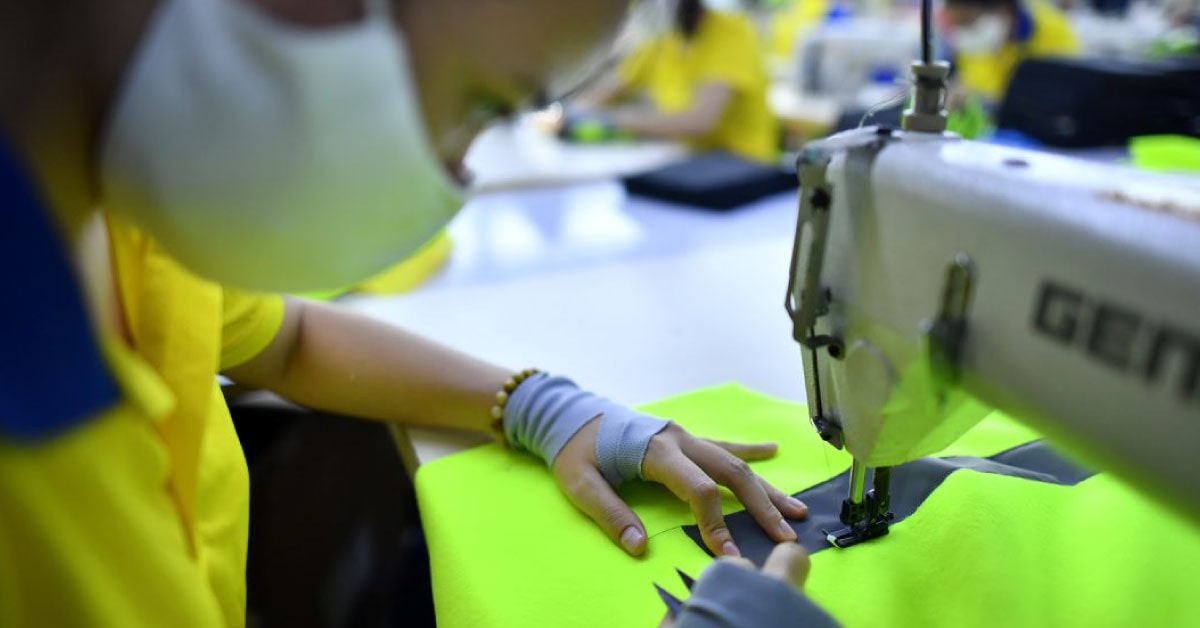
US clothing importers will increase production orders in Vietnam. Photo: L H
He explained that reducing dependence on Chinese goods has been a strategic goal in US policy in recent times. Therefore, the trend of FDI from China to neighboring countries, including Vietnam, is forecast to continue to increase in the coming years.
“Foreign investors choose Vietnam because of its open, stable market, strategic location and favorable investment environment. Their production investments are often export-oriented, with the large US consumer market being one of the destinations,” he predicted.
The FDI sector accounts for 70% of the country’s export turnover. When foreign capital in production increases, the export proportion of this sector will continue to increase. The domestic production sector, by contrast, is increasingly weak due to limited management skills, small-scale production, and very few brands known to the world because of exports through intermediaries or subcontracting. Meeting the increasingly strict standards of export markets is also a significant challenge for Vietnamese enterprises.
Related reading
- The Trump administration is “scrutinizing” the origin of goods, what should wood businesses do?
- Nghia Son Furniture and Its Direct-to-Consumer Strategy for Exporting Wooden Furniture to the U.S. Market
- Wood industry seeks solutions to maintain US market
- HAWA Representative: It is possible that wood products have not been subject to Trump’s reciprocal tariffs
- Nghia Son Furniture Amid Opportunities and Challenges as Vietnam’s Wood Industry Targets $18.5 Billion in Exports
Also predicting that FDI capital will increase in Vietnam, Mr. Phuong of HAWA said that it is necessary to strictly control the investment flow, especially foreign wood enterprises moving to Vietnam to produce for export to the US. When imports from Vietnam increase sharply, the US will apply defense measures against Vietnamese wooden furniture, leading to difficulties for domestic enterprises.
Similarly, in the textile industry, Mr. Hong of Agtex said that Vietnam needs to control the flow of FDI into the garment industry from China to avoid high tariffs imposed by the US. Along with that, it is necessary to select FDI capital that does not compete directly with domestic production, and to attract projects that bring added value to the industry or supply fabrics, raw materials and accessories the industry currently has to import in volume.
Mr. Frederic Neumann, Chief Economist of Asia-Pacific Economic Research at HSBC Bank, also said that if Vietnam is considered a gateway for Chinese goods to enter the US, the US government may try to block this loophole and impose tariffs on goods from Vietnam.
Many experts recommend that Vietnamese export enterprises should pay attention to pricing policies to avoid violating US anti-dumping rules and avoid trading in products subject to sanctions.
Mr. Trump is concerned about the trade deficit issue, so he scrutinizes the origin of goods very carefully. Promoting trade exchange activities, increasing interaction and tightening trade relations so that the two sides can understand each other better is a measure to reduce risks for Vietnam before the new administration.
Many experts also predict that under the Trump administration, Vietnam may face other economic challenges. In particular, the imposition of strong tariffs may cause export industries such as seafood, textiles, tires, wooden furniture and steel to face difficulties when demand from the US market decreases because imported goods become too expensive.
What Growing Wood Exports to the US Mean for Suppliers
The two forecasts in this article pull in opposite directions, and both can be true at once. Order volume rises because importers are moving away from China; penalty exposure rises because that same movement attracts scrutiny. A manufacturer that wins new US accounts in this window inherits the compliance obligations along with the orders.
Three things separate suppliers who keep those accounts from those who lose them. The first is a documented chain of custody for timber, ready before anyone asks. The second is pricing that sits clearly above anti-dumping thresholds, since a cheap quotation is what triggers an investigation. The third is ownership transparency, because FDI-funded plants set up purely to relabel Chinese output are the pattern that defense measures are designed to catch, and honest neighbours get caught in the same net. Buyers who are redirecting wood exports to the US in this window increasingly ask for all three during supplier qualification, before the first purchase order is issued.
Frequently Asked Questions
Proposed US tariffs of 10-20% on imports generally and 60% on Chinese goods push American importers to look for cheaper alternative sources. Vietnam’s wood furniture industry is well placed to absorb that demand, and HAWA reports order books already filled into mid-2025.
In the first nine months of the year, exports to the US reached more than 88 billion USD, up 25.6% year on year and equal to 29.4% of the country’s total export value. For the wood industry specifically, the US contributes more than 55% of total turnover.
Anti-dumping duties and trade defense measures. These are triggered when import volumes from Vietnam rise sharply, or when goods are suspected of originating elsewhere and being routed through Vietnam. Experts advise watching pricing policy and avoiding sanctioned product lines.
Because FDI already accounts for 70% of national export turnover, and a share of new wood and garment investment is Chinese capital relocating to avoid US tariffs. If Vietnam is read as a gateway for Chinese goods, the tariffs follow the goods, and domestic manufacturers absorb the consequences alongside the relocated plants.
Source: thesaigontimes.vn